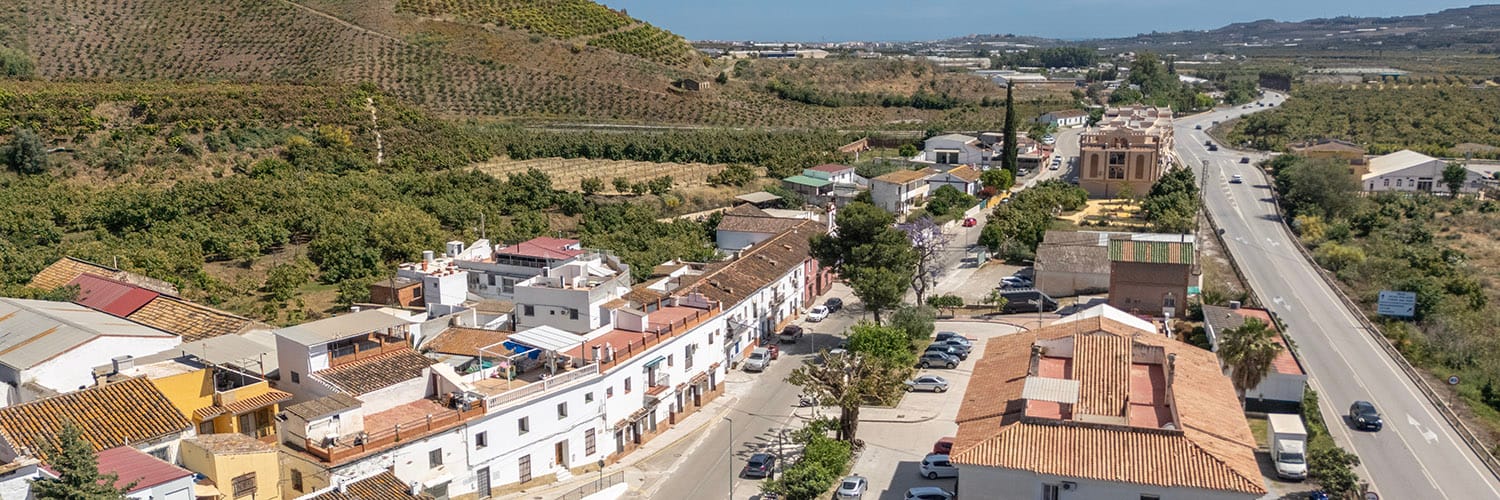
Trapiche
Set just north of Vélez-Málaga, on the inland route towards La Viñuela and the upper Axarquía, Trapiche is a small rural locality with a surprisingly varied identity. It belongs to the municipality of Vélez-Málaga and is not a town in its own right, but it has enough character, history and local activity to deserve separate attention.
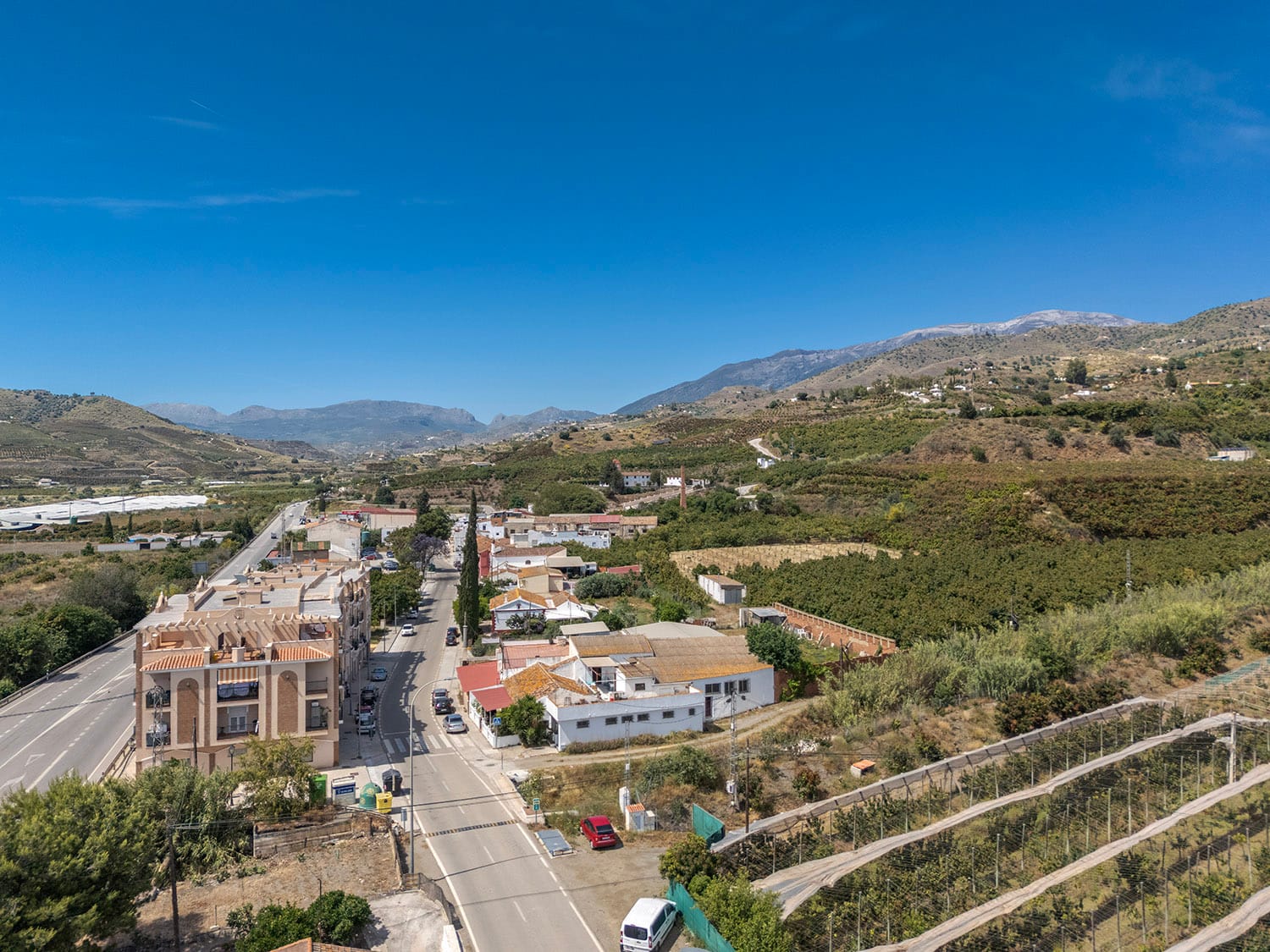
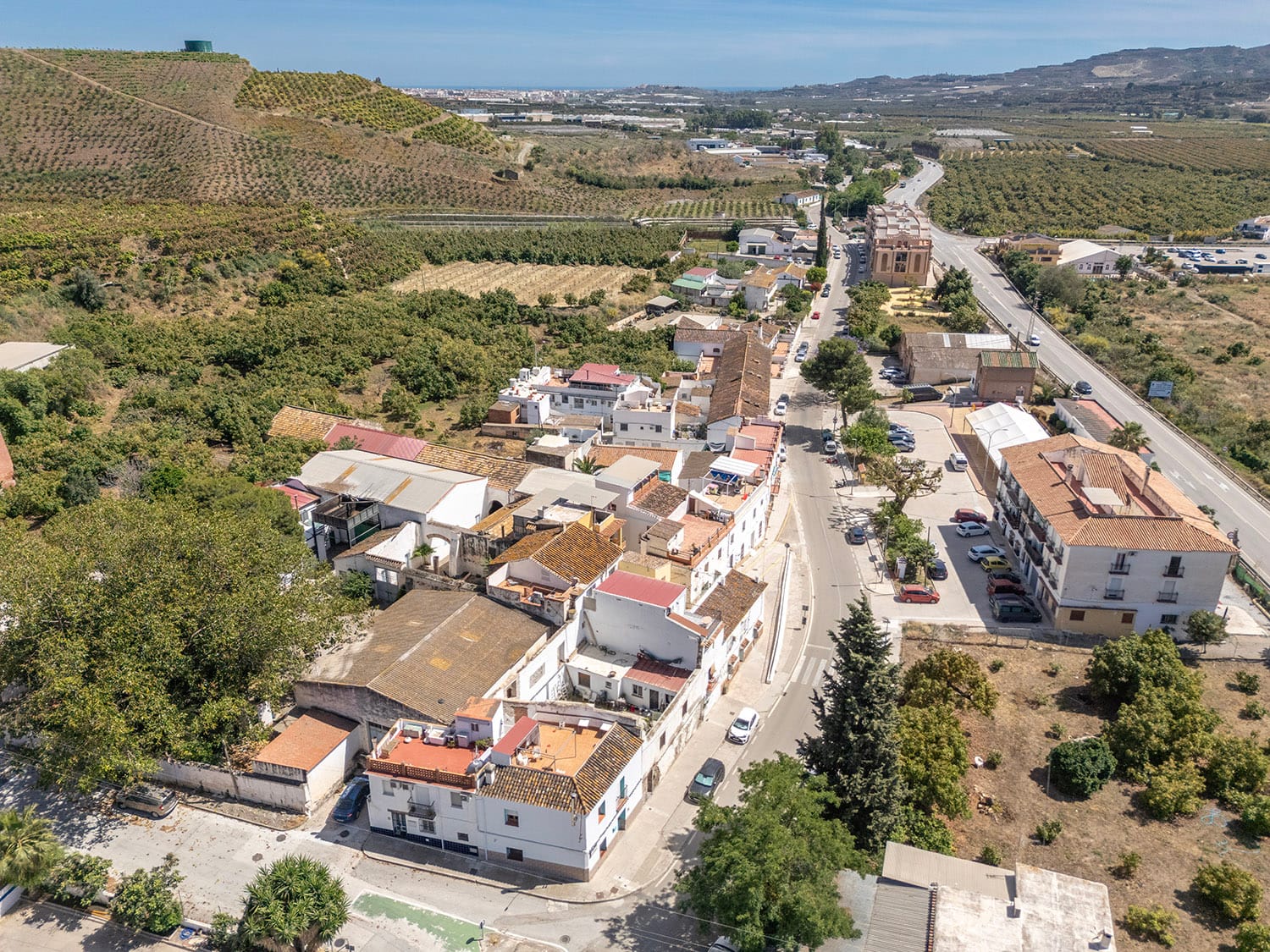
Trapiche is not a white mountain village, and it is not a coastal settlement. It sits in a more agricultural, practical landscape, close to the Río Vélez valley, the A-356 road, Vélez-Málaga, the coast and the routes that lead inland towards Triana, La Viñuela, Benamargosa and the higher villages beyond. This gives it a different role within the East of Málaga region: quieter than the town, more rural than the coast, but better connected than many smaller inland villages.
For many people, Trapiche is known for two things in particular: its historic connection with sugar production and its well-known market, where arts, crafts, food, second-hand stalls and social life come together in a way that makes the locality more visible than its size might suggest.
The Locality and Its Setting
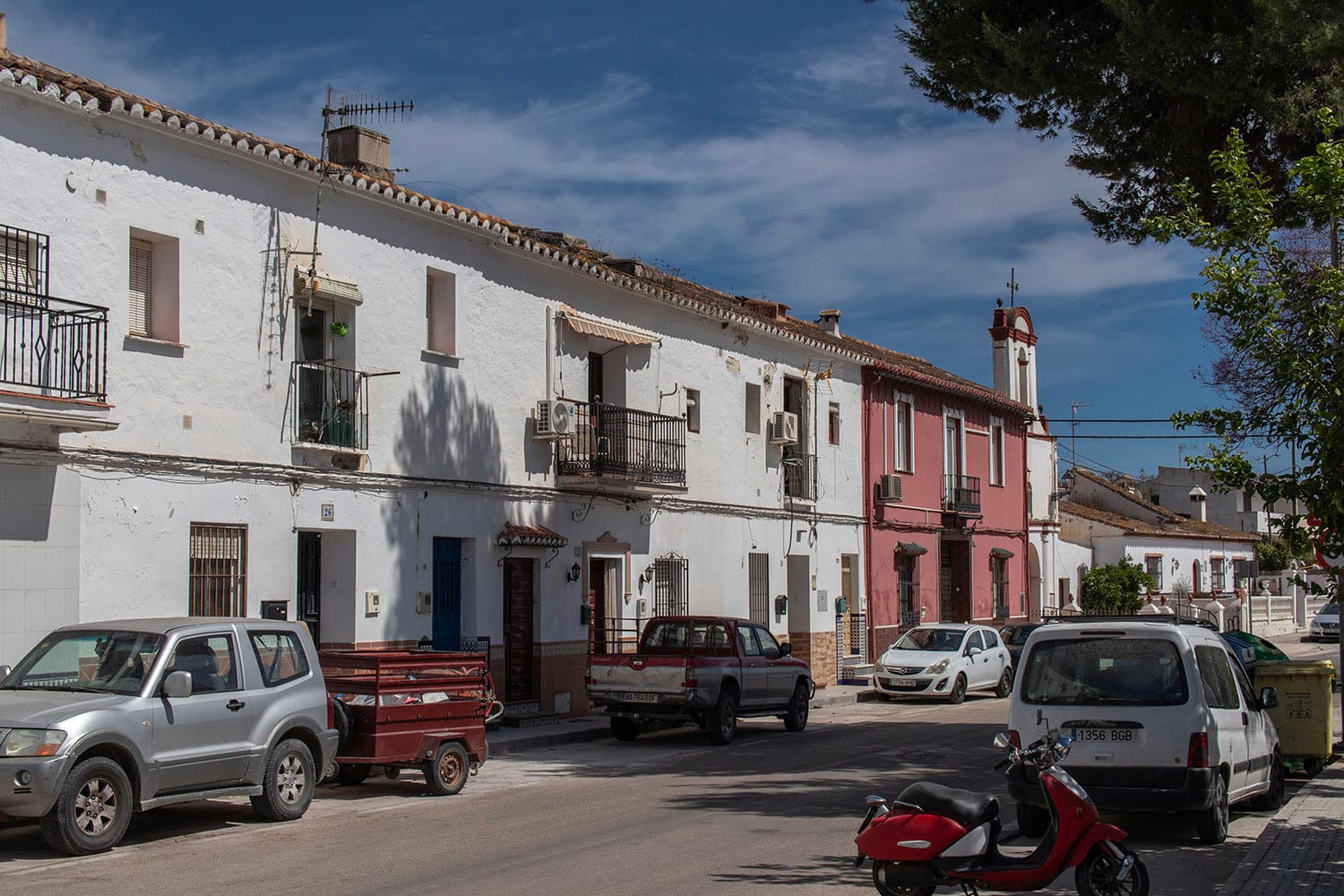
Trapiche is an inland rural locality of Vélez-Málaga, set among agricultural land and low-rise houses rather than dense urban streets. The surrounding area includes orchards, smallholdings, subtropical fruit, rural properties, light industry, roadside businesses and open countryside. It is a working landscape rather than a purely picturesque one, but that is part of its character.
The location is one of Trapiche’s main strengths. Vélez-Málaga is only a short drive away, while Torre del Mar and the coast are also within easy reach. Inland routes lead towards La Viñuela, Benamargosa and the villages of the interior, making Trapiche a useful point of connection between the coast, the Vélez valley and the northern Axarquía.
This makes it quite different from more isolated inland villages. Living in or around Trapiche gives you a rural setting, but without being far from larger shops, services, schools, healthcare and the coast. For people who want land, space or a quieter setting while remaining close to Vélez-Málaga, it may be more practical than many of the higher villages.
History and the Old Trapiche
The name Trapiche comes from the sugar mill around which the settlement developed in the 18th century. A trapiche was a mill used for crushing sugar cane, and this connection is central to the locality’s identity. The area’s history is linked to agriculture, water, mills, transport and the changing economy of the Vélez valley.
The Trapiche de San Isidro is an important reminder of that past. Although it no longer functions as a sugar mill, parts of the industrial heritage remain, including structures associated with the old complex and the distinctive chimney. The site later diversified, using the force of the Río Vélez for flour production and oil-related activity, reflecting the way local industry adapted as agriculture changed.
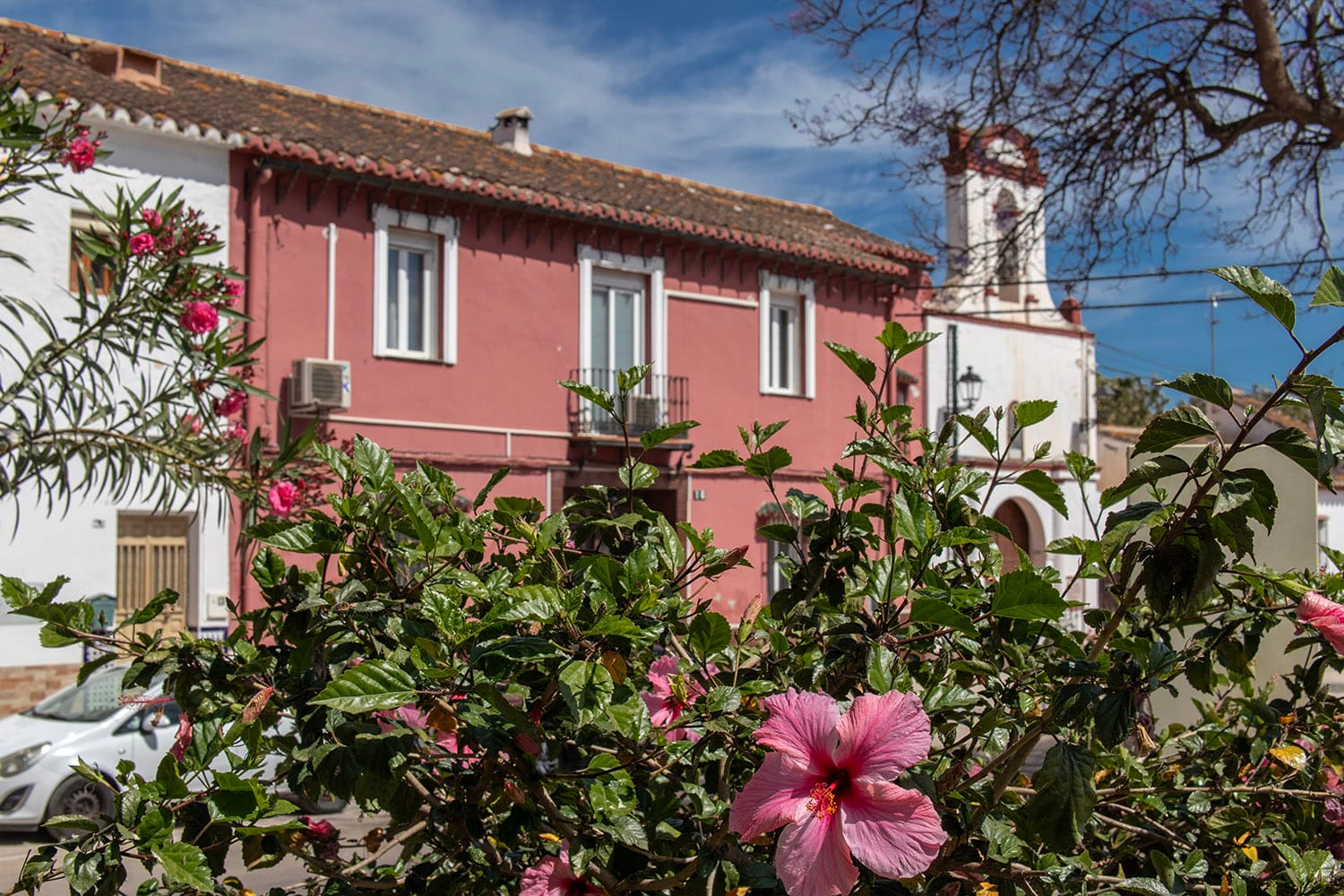
The Church of San Isidro, built in the 19th century, is another important local landmark. It reinforces the agricultural identity of the area, with San Isidro Labrador traditionally associated with farmers and rural life.
Trapiche also has a railway memory. The old apeadero, or railway halt, recalls the time when the coastal railway connected parts of the Axarquía and helped move people, produce and goods through the area. Today, the remains of that railway story give Trapiche another layer of identity beyond its role as a small rural settlement.
Trapiche Market, Arts and Crafts
One of the reasons Trapiche is better known than many localities of similar size is its market. The Trapiche market, held at Jardines del Trapiche, has long been a meeting point for residents from across the Axarquía, including both Spanish and international communities.
This is not simply a fruit-and-vegetable market, although local produce is part of the appeal. It is also known for arts and crafts, handmade goods, jewellery, textiles, pottery, woodwork, paintings, gifts, food stalls, charity tables, second-hand items and small independent sellers. The atmosphere is part market, part social morning and part community gathering.
For people living in the inland villages, the market can be a useful place to meet friends, browse stalls, pick up local produce, discover craftspeople, have coffee and feel connected to the wider international and creative life of the Axarquía. For visitors, it gives a different impression of the region from the usual beach or white-village experience.
Because market days, times and stall mixes can change, anyone planning a visit should check the current details before travelling. But as part of Trapiche’s identity, the market is important. It brings people into the locality, gives it a social and creative role, and helps explain why many residents of the wider Axarquía know Trapiche even if they do not live there.
Karma Guen and the Aerodrome
Trapiche’s surroundings include two unusual features that add to its distinctive character.
Nearby is Karma Guen, the Buddhist stupa and meditation centre associated with the Karma Kagyu lineage of Diamond Way Buddhism. Its hilltop position and international connections give this part of the Axarquía a spiritual and cultural dimension that is very different from the usual village-church-and-fiesta identity of inland Málaga.
The area is also associated with the Axarquía Aerodrome, Leoni Benabu, a sports aerodrome and aviation training centre. This gives Trapiche another unexpected point of interest. Few small inland localities can point to sugar-mill heritage, a craft market, a Buddhist meditation centre and an aerodrome within their wider area.
Local Life and Amenities
Trapiche is small, so expectations need to be realistic. It has some local facilities, restaurants, rural businesses and municipal presence, but residents generally rely on Vélez-Málaga and Torre del Mar for most everyday services. Larger supermarkets, schools, health facilities, administrative services, shops, banks, trades and professional services are all close enough to be practical by car.
A car is strongly recommended. Trapiche is not designed around a car-free lifestyle, particularly if you live outside the main cluster of houses or in a rural property. The advantage is access. Compared with many inland villages, Trapiche is well placed for people who need to move regularly between the coast, Vélez-Málaga and the interior.
Lifestyle and Community
Life in Trapiche is likely to suit people who want a rural base without being too far from services. It may appeal to remote workers, retirees, families, market regulars, people with animals, people looking for land, and those who want to be close to Vélez-Málaga but not in the town itself.
The area has a practical, mixed character. It is agricultural, residential, partly roadside, partly rural and partly social because of the market and nearby venues. It does not have the polished charm of a hilltop white village, but it has an everyday usefulness that some people will find much more important.
For people who know the Axarquía well, Trapiche is often less about sightseeing and more about function: a place you pass through, stop for lunch, visit for the market, use as a reference point, or consider if you want rural living close to Vélez.
Property and Real Estate
Property around Trapiche may include village houses, roadside homes, rural properties, fincas, smallholdings and houses with agricultural land. The area may appeal to buyers who want more space than they would find on the coast, while remaining close to Vélez-Málaga and Torre del Mar.
As always, exact location matters. A house near the road will offer different advantages and drawbacks from a rural property down a track. Buyers should check access, legal status, water, electricity, internet, drainage, boundaries, road noise, irrigation rights where relevant, and the year-round practicality of the property.
Why Choose Trapiche?
Trapiche is a good choice for people who want a practical inland base close to Vélez-Málaga, the coast and the routes into the upper Axarquía. It offers agricultural character, local history, easy access, the well-known arts and crafts market, nearby spiritual and aviation landmarks, and a more useful day-to-day location than many smaller rural settlements.
It is not the obvious choice for someone looking for beach life, dramatic mountain views or a classic white-village postcard. Its appeal is different: practical, rural, connected and quietly distinctive.
For the right person, Trapiche offers one of the more interesting small-locality options in the East of Málaga: close to everything, but still rooted in the working countryside of the Axarquía.