

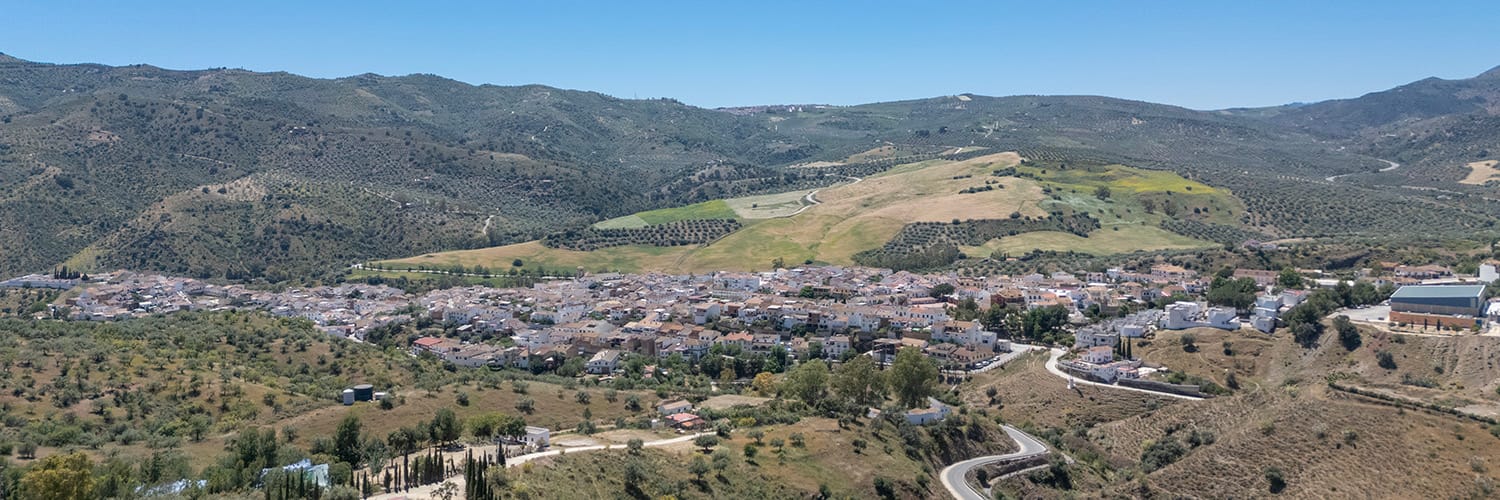
Riogordo
Set in the inland Axarquía, between the Montes de Málaga and the villages of the upper eastern countryside, Riogordo is one of the more substantial rural villages in the East of Málaga region. It is close enough to Málaga and Vélez-Málaga to remain practical, but far enough inland to have a strong rural identity of its own, shaped by olive groves, traditional agriculture, local food, religious theatre and the landscape around the Río de la Cueva.
Riogordo is not a coastal village, and it is not as dramatically perched as Comares or as high and remote as Alfarnatejo. Its appeal is different. It feels grounded, agricultural and lived-in: a working inland village with whitewashed streets, everyday services, historic buildings, local traditions and a surprisingly rich cultural calendar.
For people looking at the East of Málaga as somewhere to live, Riogordo offers a useful inland balance. It is quieter and more rural than the coastal towns, but more practical than many smaller hamlets. It may suit people who want village life, countryside, walking, olive oil, local food and access to both Málaga and the wider Axarquía.
The Village and Its Setting
Riogordo sits in a broad inland landscape of olive groves, cereal fields, orchards, riverbeds and low hills, with higher mountains rising beyond. The village has the white houses, tiled roofs, narrow streets and older corners typical of inland Málaga, but it also feels more open and functional than some of the steepest Axarquía villages.
The surrounding countryside is central to the character of the place. Olive trees are especially important, and the village is strongly associated with olive oil production, traditional milling and the agricultural work of the interior. The Río de la Cueva and nearby streams have also shaped the area, providing water, routes and fertile land in a generally dry landscape.
Riogordo’s position gives it useful connections. Colmenar, Comares, Periana, Benamargosa and Vélez-Málaga are all part of the wider local picture, while Málaga city is reachable by road. This makes Riogordo a good option for people who want inland life without feeling completely cut off.
Local Life and Amenities
Riogordo is a real village rather than a tourist invention. It has local bars, shops, municipal services, community facilities and everyday amenities, making it more self-sufficient than many smaller inland settlements. Residents will still travel to larger towns for major shopping, hospital appointments, specialist services and some administrative needs, but Riogordo itself can cover a useful amount of daily life.
A car is strongly recommended, especially for anyone living outside the main village or needing regular access to Málaga, the coast or nearby towns. However, compared with more isolated rural areas, Riogordo is fairly practical. It has a village centre, local services and a road position that makes it a workable inland base.
The village may appeal to retirees, remote workers, families, walkers, food lovers and people who want a Spanish village atmosphere without choosing somewhere too remote or too tourist-focused.
El Paso de Riogordo
Riogordo’s most famous cultural event is El Paso, the village’s live Passion play performed during Holy Week. This is one of the most important and best-known religious representations in Andalucía, and it gives Riogordo a cultural significance far beyond its size.
El Paso is not a small church procession or a simple local performance. It is a major community production involving large numbers of local people, with scenes from the Passion of Christ performed in a natural open-air setting. For the village, it is not just an event for visitors. It is part of collective memory, local pride and identity.
For anyone trying to understand Riogordo properly, El Paso matters. It shows the strength of the community, the importance of tradition and the way a relatively small inland village can become widely known through one powerful annual event.
Museo Etnográfico and Olive Oil
Another important landmark is the Museo Etnográfico, housed in an old oil mill close to the church. The museum preserves objects, tools, machinery and domestic items connected with rural life, olive oil, flour, wine, traditional houses and the working history of the village.
This is one of the best ways to understand Riogordo’s agricultural identity. The museum is not just a collection of old things. It tells the story of how people lived, worked, cooked, pressed olives, stored wine, milled grain and organised their domestic lives in earlier generations.
The village’s olive oil culture is also celebrated through La Molienda de Riogordo, a cultural and gastronomic event centred on extra virgin olive oil. Demonstrations, tastings, visits, local products and traditional milling help connect present-day visitors with the old economy of the olive grove.
Food and Local Traditions
Riogordo has a strong food identity. One of its best-known dishes is caracoles en caldo, snails cooked in a traditional broth. The Día del Caracol celebrates this local speciality and draws visitors into the village for food, music and a festive atmosphere.
Other local dishes are linked to the countryside and the kitchen traditions of inland Málaga: migas, gazpacho de habas verdes, porra campesina, pimentón, local sausages, olive oil, bread, wine and traditional sweets. This is not delicate coastal cooking. It is rural food, built around the produce, labour and seasons of the inland Axarquía.
Fiestas and local celebrations are an important part of the village’s rhythm. As in many inland communities, these events are not simply for tourism. They are part of how Riogordo keeps its local identity alive.
Countryside and Outdoor Life
The countryside around Riogordo is well suited to walking, cycling, scenic drives and exploring the inland Axarquía. The official local walking routes include the Paseo de los Ríos, a circular route that follows the natural environment around the village and links with wider long-distance walking routes.
The Río de la Cueva, nearby arroyos, olive groves, country roads and surrounding hills give the area a varied landscape without the extreme drama of the higher mountain villages. It is a good place for people who want accessible countryside, rural views and a sense of space.
Spring and autumn are especially attractive for walking, when the temperatures are milder and the countryside has more colour. Summers can be hot, and winter evenings can be cool, so anyone thinking of living here year-round should consider shade, heating, orientation and outdoor space carefully.
Lifestyle and Community
Life in Riogordo is likely to suit people who want a traditional inland village with a real community and a practical level of services. It is not a beach town, a resort or a large international enclave. Its appeal is quieter, more Spanish and more rural.
That does not mean it is cut off or empty. Riogordo has strong traditions, local associations, a visible cultural calendar and enough daily life to feel active throughout the year. For newcomers, speaking Spanish or being willing to learn will make a real difference, as it will in most inland villages.
Riogordo may suit people who value food, countryside, walking, local traditions, olive oil, religious culture and a slower pace of life. It may be less suitable for those who want nightlife, immediate beach access or a large English-speaking community.
Property and Real Estate
Property in Riogordo may interest buyers looking for inland value, village character and good access to the wider Axarquía. In the village, there are traditional townhouses, renovated homes, family houses and properties with terraces or views. In the countryside, there may be fincas, olive groves, rural homes and properties with more land and privacy.
As always, exact location matters. A house in the village centre will offer a very different lifestyle from a rural property several kilometres away. Buyers should check access, parking, legal status, water, electricity, drainage, internet, boundaries, road condition, heating and orientation.
Riogordo is practical by inland standards, but rural properties still require careful thought. Views and land are attractive, but daily life depends on the details.
Why Choose Riogordo?
Riogordo is a strong choice for people who want inland Axarquía life with tradition, services, countryside and cultural depth. It offers olive groves, local food, El Paso, the Museo Etnográfico, walking routes, rural views and a stronger village identity than many places of similar size.
It is not the obvious choice for beach life, nightlife or resort convenience. Its appeal is more grounded and local.
For the right person, Riogordo offers one of the most balanced inland options in the East of Málaga: traditional, practical, agricultural, culturally rich and well placed for exploring both the northern Axarquía and the routes back towards Málaga.
All Riogordo Pages
Overview
Reasons to Live Here
Property at a Glance
Local Highlights
Schools, Healthcare and Transport
Local Fiestas and Events
Stay, Eat and Drink
Sports and Outdoor Activities
Business and Economy
Further info about Riogordo.
RIOGORDO – A Facebook group, mainly small ads
NOTICIERO de Riogordo – A Facebook group with some info as well as ads