

Colmenar
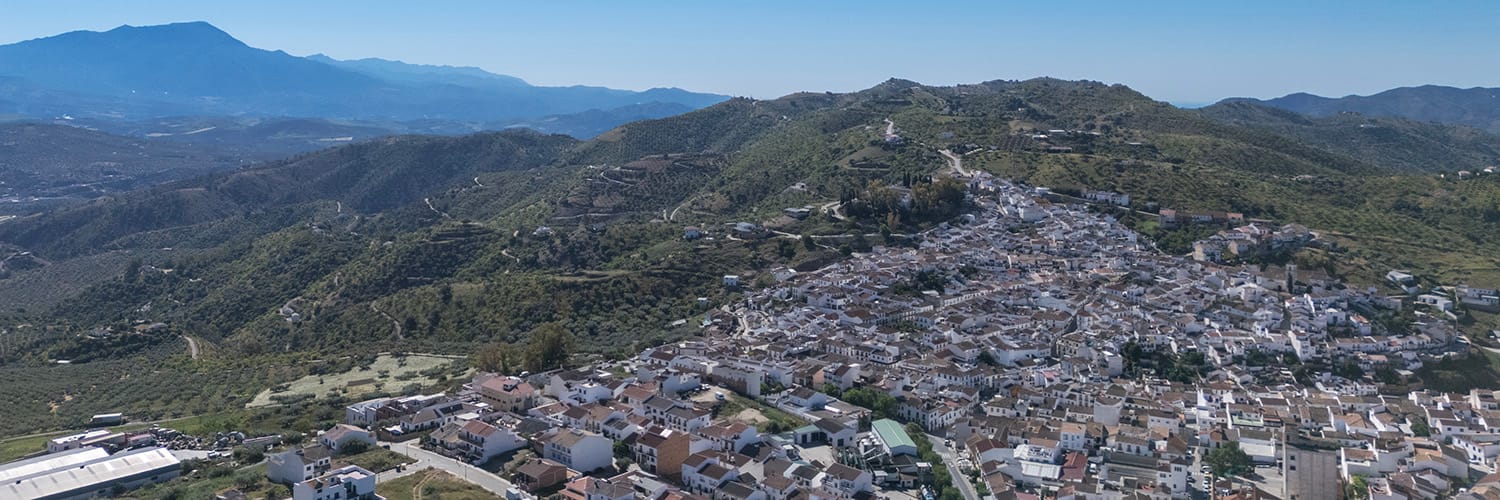
Set between the Axarquía and the Montes de Málaga, Colmenar is one of the most important inland villages in the northern part of the East of Málaga region. It has a different character from the coastal towns, and also from the smaller white villages tucked into the valleys and hills further east. Colmenar feels more substantial, more practical and more self-contained, while still retaining the rural identity, whitewashed streets and agricultural surroundings that define this part of inland Málaga.
The village sits at a relatively high altitude, with wide views, cooler evenings than the coast, and easy access to open countryside. It is often associated with honey, which is reflected in the name itself: Colmenar comes from colmena, meaning beehive. That connection is not just historical decoration. Honey, bees, local produce, sausages, mosto, cheese, olive oil and mountain food culture all remain important parts of the village’s identity.
For people looking at the East of Málaga as somewhere to live, Colmenar offers a practical inland option: rural surroundings, local services, road links to Málaga city and the Axarquía, and a stronger sense of everyday village life than you may find in places shaped mainly by tourism or second homes.
The Village and Its Setting
Colmenar occupies a strategic position on the inland route between Málaga and the Axarquía. It sits close to the Montes de Málaga and within reach of villages such as Riogordo, Comares, Alfarnate, Alfarnatejo and Casabermeja, while Málaga city is also accessible by road. This gives the village a useful role as a gateway between different landscapes: the city and its mountains to the west, the Axarquía to the east, and the higher inland country to the north.
The setting is open, rural and varied. Around Colmenar you find olive groves, almond trees, cereal fields, grazing land, wooded areas, mountain roads and long views across the surrounding countryside. It is not a beach village and does not try to be one. Its appeal lies in inland Andalucía: hills, food, agriculture, fresh air, traditional fiestas and a slower pace of life.
The village itself has the white houses, tiled roofs, narrow streets and older corners typical of inland Málaga, but it also feels more functional than some of the smaller villages. It is not simply a picturesque stop for visitors. It is a working village with services, local shops, schools, bars, municipal facilities and year-round life.
Local Life and Amenities
Colmenar is one of the more practical inland choices in the East of Málaga. It has more local services than many smaller villages, making day-to-day life easier for people who want an inland base without being too isolated. Residents still travel to Málaga, Vélez-Málaga or other larger towns for major shopping, hospitals, specialist services and some administrative needs, but Colmenar itself can cover many everyday requirements.
A car is strongly recommended, especially for anyone living outside the main village or needing regular access to Málaga, the coast or nearby towns. However, compared with more remote villages, Colmenar is better placed for people who need to balance rural living with practical access.
This makes the village attractive to a slightly wider range of people than some of the more secluded inland settlements. It may suit retirees, remote workers, families, people with animals, walkers, cyclists, food lovers and anyone who wants countryside around them without feeling completely cut off.
Honey, Food and Local Identity
Honey is central to Colmenar’s identity. The Museo de la Miel de Málaga is one of the village’s best-known attractions and helps explain the long relationship between the area, beekeeping and local food production. For visitors, it offers a useful introduction to the world of bees, honey and rural life. For residents, it reflects something deeper about the village’s history and economy.
Colmenar is also known for its food culture more generally. The Fiesta del Mosto y la Chacina celebrates two of the village’s great local traditions: young wine and cured meats. It is the kind of gastronomic event that makes sense in a place like Colmenar, where agriculture, livestock, seasonal produce and local recipes are still part of the village’s character.
This is hearty inland food country. Expect dishes, products and traditions linked to the mountains rather than the coast: sausages, stews, goat’s cheese, honey, olive oil, local wine, migas, meats and seasonal produce. Colmenar is a good village for people who enjoy food that is rooted in place rather than styled for tourists.
History and Things to See
One of Colmenar’s most recognisable features is the Puerta de la Cruz, the gateway monument that welcomes visitors into the village and includes the municipal coat of arms with its beehive and bees. It is a simple but effective statement of local identity: this is Colmenar, and honey matters here.
The Church of Nuestra Señora de la Asunción is one of the main historic buildings in the village. Standing in the older part of Colmenar, it reflects the religious and architectural history of the settlement. The Ermita de Nuestra Señora de la Candelaria, also associated with the village’s patron celebrations, is another important local landmark.
The older streets are worth exploring on foot. Colmenar is not as polished as some of the more tourist-facing villages, and that is part of its interest. It feels real, lived-in and connected to the surrounding countryside. Visitors who enjoy small details — doorways, viewpoints, fountains, tiled signs, church architecture, local bars and everyday street life — will find more here than a quick drive-through might suggest.
Fiestas and Traditions
Colmenar’s annual calendar reflects its inland and agricultural character. The celebrations around La Candelaria and San Blas are among the most important religious and local events, while the Fiesta del Mosto y la Chacina brings food, music, local products and visitors into the village.
These events are useful for understanding Colmenar because they show what the village values: faith, food, music, local produce, community and continuity. They are not simply tourist attractions. They are part of how the village marks the year and keeps its identity alive.
Countryside and Outdoor Life
The countryside around Colmenar is one of its great strengths. The village is well placed for walking, cycling, scenic drives and exploring the Montes de Málaga and the northern Axarquía. The landscape is varied enough to offer wooded areas, open farmland, mountain views and quiet country roads, without feeling as remote as some of the higher villages further east.
Because of its altitude and inland position, Colmenar also has a different climate from the coast. Summers can still be hot, but evenings may be fresher, and winters can feel noticeably colder. Anyone thinking of living here year-round should think seriously about heating, orientation, insulation and outdoor space, particularly in older houses.
Property and Real Estate
Property in Colmenar may appeal to buyers looking for more space, better value and a practical inland lifestyle. In the village, there are traditional townhouses, renovated homes, larger family houses and properties with terraces or views. In the surrounding countryside, there are fincas, rural homes and properties with land, privacy and wide views.
As always in the Axarquía, rural property needs careful checking. Access, legal status, water supply, electricity, internet, drainage, boundaries, heating, road condition and distance from services all matter. Colmenar is practical by inland standards, but a house several kilometres outside the village can still feel very different from a home in the centre.
Why Choose Colmenar?
Colmenar is a strong choice for people who want inland life without feeling too remote. It offers rural scenery, food traditions, honey, local services, access to Málaga and the Axarquía, and a more practical day-to-day base than many smaller villages.
It is not the obvious choice for beach life, nightlife or a large international scene. Its appeal is quieter, more grounded and more agricultural.
For the right person, Colmenar offers one of the best balances in the inland north of the East of Málaga: countryside, services, tradition, food culture and road connections, all in a village with a strong identity of its own.
All Colmenar Pages
Overview
Reasons to Live Here
Property at a Glance
Local Highlights
Schools, Healthcare and Transport
Local Fiestas and Events
Stay, Eat and Drink
Sports and Outdoor Activities
Business and Economy
Further info about Colmenar.