Almáchar
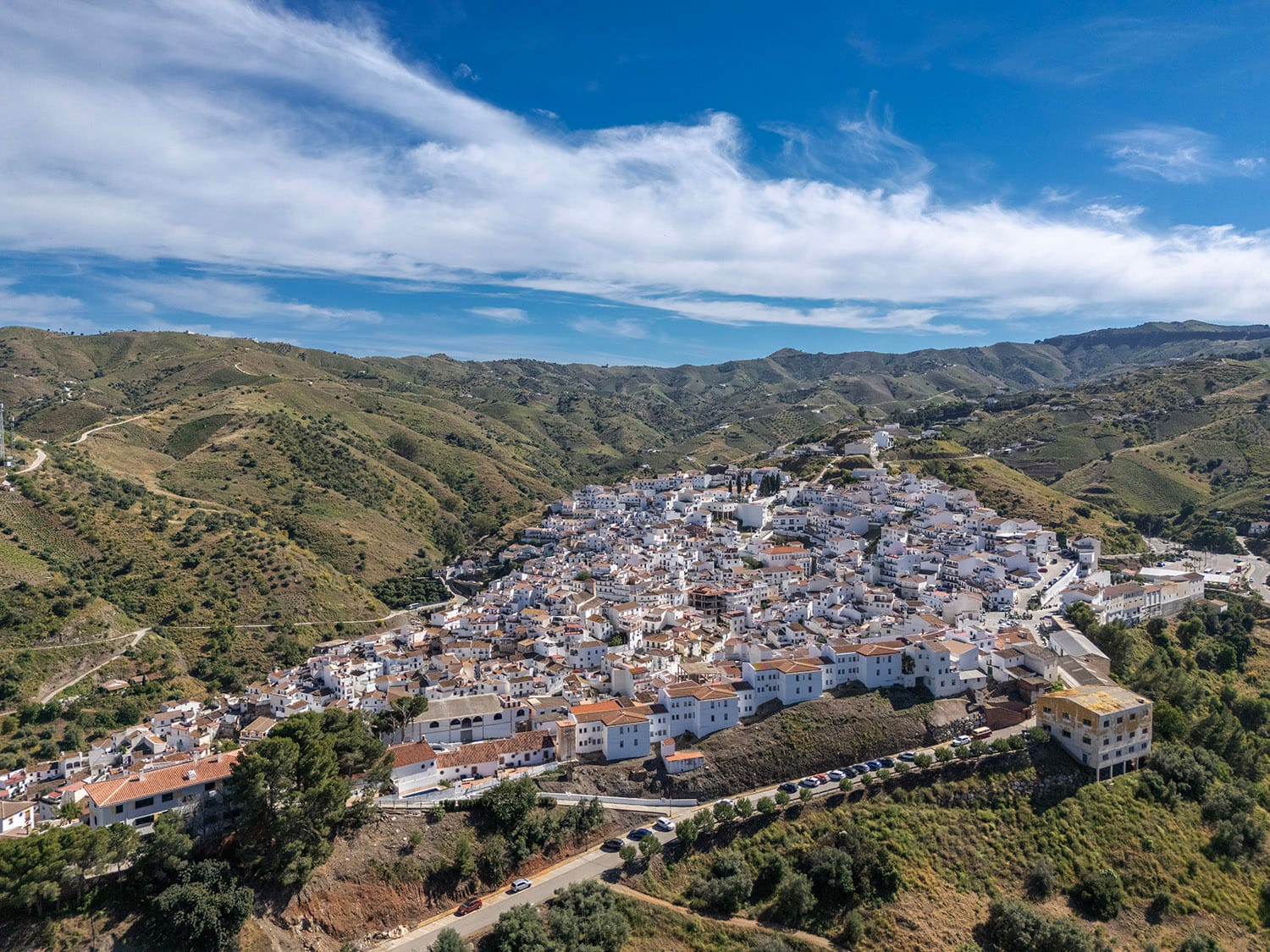
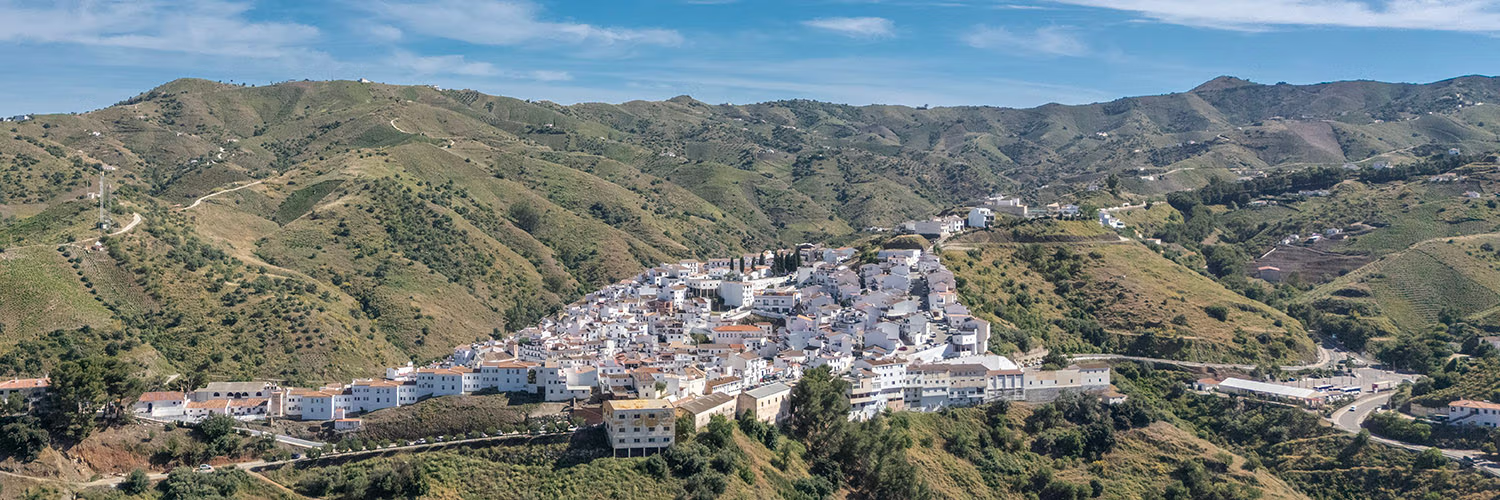
Set among the hills of the Axarquía, surrounded by vineyards, olive trees and traditional agricultural terraces, Almáchar is one of the key inland villages of the East of Málaga region. It sits within the historic raisin-producing landscape of the Axarquía, where moscatel grapes have shaped the economy, culture and identity of the area for generations.
Almáchar is not a mountain village in the same way as Alfarnate or Alfarnatejo, nor is it a coastal settlement with easy promenades and beach-town services. It occupies a middle ground: inland, rural, traditional and hilly, but still relatively well placed for reaching Vélez-Málaga, the coast and the wider Axarquía. This gives it a character of its own. It feels agricultural and local, but not completely remote.
For visitors, Almáchar is best known for raisins, ajoblanco and whitewashed streets. For anyone thinking about living here, its appeal lies in the combination of traditional village life, strong local identity, countryside views and a more practical location than some of the higher, more isolated inland villages.
The Village and Its Setting
Almáchar is a classic Axarquía white village, built on a hillside and shaped by narrow streets, white façades, steep corners, small squares and glimpses out towards the surrounding countryside. The village has Moorish origins, reflected in its irregular street pattern and close-knit urban layout, but it is not a preserved museum piece. This is a lived-in village, with local routines, working agriculture and a strong sense of everyday life.
The surrounding landscape is central to Almáchar’s identity. This is raisin country. The hills around the village are marked by vines, paseros, olive trees, almond trees and small agricultural plots. In late summer and early autumn, the traditional raisin process becomes part of the scenery, with grapes dried on sloping beds in the sun before being worked by hand.
Almáchar forms part of the wider Ruta de la Pasa, the raisin route that links several inland villages associated with the production of Málaga’s famous moscatel raisins. This agricultural tradition is not just a quaint detail for visitors. It remains part of the village’s cultural identity and one of the reasons Almáchar feels so connected to the land around it.
Local Life and Amenities
For an inland village, Almáchar has a useful level of local life. There are bars, shops, municipal services and everyday facilities, although residents still need to travel for larger supermarkets, specialist services, major shopping, hospital appointments and some administrative needs.
Vélez-Málaga is the obvious larger service centre for many practical errands, while the coast is close enough for beach visits, restaurants, larger shops and a change of scene. Málaga city and the airport are also reachable by car, but this is still an inland village, and anyone living here should expect to rely on a vehicle for most regular movement outside the village.
Within Almáchar itself, daily life is more local and community-based than international. It is not one of the Axarquía villages most strongly associated with foreign relocation, although international buyers and residents are certainly part of the broader area. The village is likely to suit people who want Spanish village life rather than a ready-made expat environment.
Lifestyle and Community
Almáchar has a grounded, agricultural feel. It is a place where village life, local food, seasonal work and community traditions still matter. The rhythm is quieter than on the coast, but not as remote or rugged as the northern mountain villages. This makes it a good option for people who want an inland lifestyle without feeling completely detached from larger towns and services.
The village may appeal to retirees, remote workers, couples and families who are comfortable with rural Andalucía and do not need everything on the doorstep. It may also suit people who like the idea of living in a traditional village but still want to be able to reach the coast, Vélez-Málaga or Málaga city without making a major expedition.
As with many inland villages, it helps to speak Spanish or be willing to learn. Almáchar is not a place where newcomers should expect everything to operate around English. That is part of its appeal for people who want a more authentic local experience, but it is also something to consider honestly before choosing it as a base.
Food, Raisins and Ajoblanco
Food is one of Almáchar’s strongest calling cards. The village is especially associated with ajoblanco, the cold almond and garlic soup that is one of the great traditional dishes of Málaga. In Almáchar, ajoblanco is not just something on a menu. It is central to the village’s most famous celebration, the Fiesta del Ajoblanco, held every September.
The festival brings visitors into the village to enjoy ajoblanco, local products, music, atmosphere and the wider food culture of the area. It is a good example of how local identity, agriculture and tourism can overlap without the village losing its essential character.
Raisins are just as important. The Museo de la Pasa, housed in a traditional village building, helps explain the work involved in producing moscatel raisins and the way this industry shaped local life. For anyone trying to understand Almáchar properly, the museum is more than a tourist stop. It is part of the story of the village.
Things to See and Do
Almáchar is best explored slowly and on foot, although the streets are steep in places and comfortable shoes are useful. The village has attractive corners, traditional houses, views across the surrounding hills and a strong sense of place. The Church of San Mateo is one of the main historic buildings, while the older streets and neighbourhoods give a good impression of the village’s Moorish-influenced layout.
The countryside around Almáchar is also worth exploring, particularly for people interested in walking, photography, agriculture and the changing seasonal colours of the Axarquía. The raisin landscape is especially interesting in late summer and early autumn, when the work of harvesting and drying the grapes is most visible.
Almáchar also makes sense as part of a wider inland route. El Borge, Moclinejo, Cútar, Benamargosa and other nearby villages each have their own character, and together they form one of the most culturally distinctive parts of the Axarquía.
Property and Real Estate
Property in Almáchar is likely to appeal to buyers looking for an inland village with character, views and a strong local identity, but without being as remote as some of the higher mountain settlements. In the village itself, buyers may find traditional townhouses, renovation projects and homes with roof terraces or views. In the surrounding countryside, there may be rural properties, agricultural land and houses with more space and privacy.
As always in the Axarquía, buyers should check access, legal status, water, electricity, internet, drainage, orientation and road conditions carefully, especially outside the main village. A rural property may look idyllic, but practical details matter enormously once you are living there all year round.
Why Choose Almáchar?
Almáchar is a good choice for people who want a traditional inland Axarquía village with real cultural depth. It offers whitewashed streets, agricultural landscapes, strong food traditions, a famous local festival and a practical position within reach of larger towns and the coast.
It is not the place for someone who wants beach life, nightlife or a large international scene. But for those drawn to Spanish village life, moscatel country, local food, hillside views and a strong sense of place, Almáchar is one of the most interesting and characterful inland villages in the East of Málaga.
All Almáchar Pages
Overview
Reasons to Live Here
Property at a Glance
Local Highlights
Schools, Healthcare and Transport
Local Fiestas and Events
Stay, Eat and Drink
Sports and Outdoor Activities
Business and Economy
Further info about Almáchar