

Alfarnatejo
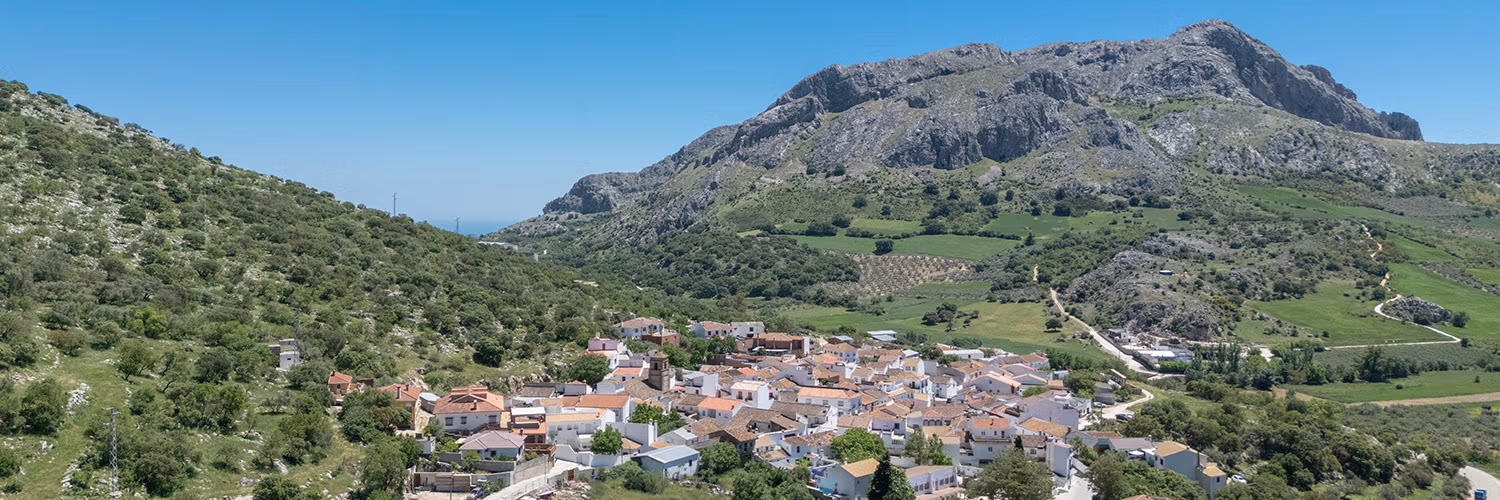
Set high in the northern Axarquía, close to its neighbour Alfarnate, Alfarnatejo is one of the smallest and most dramatic villages in the East of Málaga region. At around 925 metres above sea level, it belongs very much to the mountainous side of the comarca, far removed in atmosphere from the beaches, promenades and subtropical plantations closer to the coast.
This is a place of cliffs, ravines, open skies and rugged scenery. Alfarnatejo is often associated with the phrase “Los Pirineos del Sur” — the Pyrenees of the South — and while that may sound like a piece of local exaggeration, the landscape does help explain it. The village is surrounded by striking limestone formations, mountain peaks and deep natural cuts in the land, giving it a wilder and more secluded feel than many of the better-known white villages of the Axarquía.
The Village and Its Setting
Alfarnatejo is not a large or busy village. Its charm lies in its scale, its position and the sense that you are in a quieter, more remote corner of Málaga province. The streets are whitewashed and traditional, with a simple rural character rather than the polished look of a tourist village. This is not somewhere built around visitors, second homes or beach-town convenience. It is a working inland village with a strong connection to the surrounding countryside.
The landscape is the main event. Alfarnatejo sits among some of the most impressive mountain scenery in the Axarquía, with the peaks of Chamizo, Gallo and Vilo forming part of the broader setting. Nearby are the dramatic Tajos del Gómer, Doña Ana and Fraile, as well as the Río Sábar and its ravines. These natural features give the area a grandeur that feels very different from the softer hills and vineyard slopes found elsewhere in the region.
Because of its altitude, Alfarnatejo also has a more continental feel than the coast. Summers can still be hot, but evenings are often fresher than in lower areas, and winters can be cold by Málaga standards. Anyone considering living here should understand that this is high-country Axarquía. The sea is part of the wider province, but Alfarnatejo’s identity is mountain, stone, olive grove, valley and sky.
Local Life and Amenities
Alfarnatejo has the essentials of a small rural village, but it should not be confused with a larger service centre. Day-to-day life is quiet, local and practical. There are municipal services, local bars and basic amenities, but for larger supermarkets, specialist shops, more extensive healthcare, schools beyond the local level, professional services and major errands, residents will generally need to travel.
A car is strongly recommended here. This is not the kind of place where most newcomers would want to rely only on public transport. Road access is part of the decision-making process, particularly for anyone who needs regular trips to Málaga, Vélez-Málaga, the coast, the airport or larger towns. The reward is peace, space and scenery; the trade-off is distance from convenience.
For people who want a lively international community, easy beach access or a full range of services on the doorstep, Alfarnatejo may feel too quiet. For people who want a genuinely rural village, mountain surroundings, fresh air, dark skies and a slower pace of life, it may be exactly the kind of place they are looking for.
Lifestyle and Community
Alfarnatejo is best understood as a traditional inland village rather than a relocation hotspot. Its appeal is not based on glamour, nightlife or a long list of attractions. It is based on setting, authenticity and the feeling of being close to nature.
Life here is likely to suit people who enjoy quiet routines, walking, landscape, local food, small communities and the practical simplicity of village life. It may appeal to retirees, remote workers who do not need daily access to the coast, outdoor people, climbers, walkers, photographers and anyone who prefers the mountains to the beach.
As with many of the smaller villages of the Axarquía, making an effort with Spanish and local customs will make a real difference. Alfarnatejo is not a place where you can assume that life will bend itself around English-speaking newcomers. That is part of its character. For the right person, the lack of a large expat bubble is a benefit rather than a drawback.
Outdoor Activities
Alfarnatejo is one of the strongest outdoor destinations in the northern Axarquía. The surrounding cliffs and ravines make the area especially attractive for walking, hiking, climbing and landscape photography. The Tajos are among the defining features of the municipality, and the routes through this countryside offer a much more rugged experience than a gentle stroll through an olive grove.
The area is also associated with climbing and via ferrata activity, making it a good choice for visitors and residents who want more adventurous mountain experiences. Even for those who are not climbers, the scenery gives Alfarnatejo a sense of drama that is hard to miss.
Walking routes, quiet roads and the surrounding sierras make the village a useful base for exploring the northern edge of the Axarquía. The landscape changes with the seasons, with almond blossom, olive trees, wildflowers, dry summer tones and clearer winter views all contributing to the appeal.
Food, Traditions and Local Character
Alfarnatejo is known locally for its gazpacho, particularly the Gazpacho de los Tres Golpes, which is celebrated during the village’s Fiesta del Gazpacho. This is a good example of the kind of food culture that still matters in the inland Axarquía: simple ingredients, local identity and traditions that are tied to village life rather than restaurant trends.
The village also has religious and seasonal celebrations, including those connected with Santo Cristo de Cabrilla, San Marcos and other local dates. As always in rural Andalucía, fiestas are not just events for visitors. They are part of how the village marks the year and keeps its local identity alive.
Property and Real Estate
Property in Alfarnatejo is likely to interest buyers looking for value, scenery and a quieter inland setting. In and around the village, you may find traditional houses, rural homes and properties with views or land. As with all inland and campo property, buyers should look carefully at access, water, electricity, legal status, boundaries, heating, orientation and road conditions.
The altitude matters too. A house that feels charming in spring may need proper heating in winter, and a rural property with difficult access may feel very different after heavy rain or in colder weather. The landscape is part of the attraction, but it also needs to be respected.
Why Choose Alfarnatejo?
Alfarnatejo is not a compromise version of Alfarnate. It has its own character: smaller, quieter, more rugged and more closely defined by its dramatic natural surroundings.
It is not the obvious choice for someone wanting beach life, convenience or a ready-made international social scene. But for those drawn to mountains, cliffs, walking, climbing, rural traditions and a more secluded way of life, Alfarnatejo is one of the most distinctive villages in the East of Málaga.
For the right person, it offers something increasingly rare: space, silence, views, local character and a powerful sense of being in the high country of the Axarquía.
All Alfarnatejo Pages
Overview
Reasons to Live Here
Property at a Glance
Local Highlights
Schools, Healthcare and Transport
Local Fiestas and Events
Stay, Eat and Drink
Sports and Outdoor Activities
Business and Economy
Further info about Alfarnatejo.